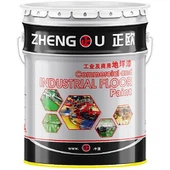
Solvent-Free Epoxy Primer and Intermediate Coating: How 4411 Builds High-Performance Industrial Flooring Systems
Introduction: The Hidden Layer That Determines Industrial Floor Performance
In modern industrial facilities, flooring is no longer just a surface finish. A factory floor must withstand continuous traffic, heavy machinery, forklifts, chemical exposure, impact, and daily production operations.
Many companies invest heavily in high-quality epoxy topcoats but still experience common flooring problems after only a few years:
Peeling and delamination
Cracking under heavy loads
Surface wear caused by forklifts
Dust generation affecting production environments
Frequent maintenance and repair costs
In many cases, the problem is not the topcoat itself.
The real issue lies beneath the surface - the primer and intermediate coating layer.
A high-performance industrial epoxy flooring system requires a strong foundation. This is where solvent-free epoxy primer and intermediate coatings become essential.
Shanghai Zhengou's 4411 Solvent-Free Epoxy Primer & Intermediate Coating is designed as a structural layer that improves adhesion, mechanical strength, durability, and overall flooring system performance.
This article explains:
What solvent-free epoxy primer and intermediate coating are
Why industrial floors require this technology
How 4411 improves flooring durability
Which industries benefit most from this solution
How to select the right epoxy flooring system for industrial applications
1. What Is Solvent-Free Epoxy Primer and Intermediate Coating?
A complete epoxy flooring system usually consists of three main layers:
Primer Layer
Intermediate Coating Layer
Topcoat Layer
Each layer has a different function.
The primer creates adhesion between the concrete substrate and epoxy system.
The intermediate coating builds thickness, improves mechanical strength, and provides structural reinforcement.
The topcoat provides the final protection layer, including:
Wear resistance
Chemical resistance
Appearance
Easy cleaning performance
A solvent-free epoxy primer and intermediate coating combines the functions of both primer and intermediate layers into one high-performance material.
Unlike traditional solvent-based epoxy products, solvent-free epoxy systems contain little or no organic solvent.
This provides several advantages:
Higher solid content
Lower VOC emissions
Stronger film formation
Better thickness control
Improved durability
For industrial applications where performance and long service life are critical, solvent-free epoxy technology has become an increasingly preferred solution.
2. Why Traditional Industrial Flooring Systems Fail
Industrial flooring failures are usually caused by several factors.
Understanding these problems helps explain why the intermediate coating layer is so important.
2.1 Poor Adhesion Between Concrete and Coating
Concrete is naturally porous.
Without proper preparation and a strong primer layer, epoxy coatings may fail because of:
Weak bonding
Moisture migration
Concrete dust
Surface contamination
The result is:
Bubble formation
Peeling
Coating separation
A high-quality solvent-free epoxy primer penetrates into the concrete surface and creates a stronger mechanical and chemical bond.
The stronger the foundation, the longer the flooring system performs.
2.2 Insufficient Thickness for Heavy Industrial Use
Many low-cost flooring systems focus only on surface appearance.
However, industrial environments require structural strength.
A warehouse floor may experience:
Thousands of forklift movements every day
Heavy pallet loads
Mechanical equipment vibration
Impact from materials handling
A thin coating cannot effectively absorb these stresses.
The intermediate coating layer provides:
Additional thickness
Higher impact resistance
Improved load distribution
Better protection of the concrete substrate
2.3 High Maintenance Costs
For factories, floor damage is not only a repair issue.
It can create:
Production interruptions
Safety risks
Cleaning problems
Additional labor costs
A durable industrial flooring system reduces long-term maintenance requirements.
The goal is not simply to install a floor.
The goal is to create a surface that supports continuous production.
3. Key Advantages of Shanghai Zhengou 4411 Solvent-Free Epoxy Primer & Intermediate Coating
3.1 Excellent Adhesion Performance
The primary function of 4411 is creating a strong connection between concrete and the epoxy flooring system.
Its advantages include:
Strong penetration capability
Reliable bonding performance
Improved coating stability
This helps reduce common industrial flooring problems such as:
Peeling
Cracking
Layer separation
A strong foundation creates a longer-lasting flooring solution.
3.2 High Mechanical Strength for Heavy-Duty Applications
Industrial floors require more than visual appeal.
They must withstand mechanical stress.
4411 is suitable for environments involving:
Forklift traffic
AGV transportation systems
Heavy equipment operation
Manufacturing processes
By strengthening the intermediate layer, the flooring system achieves better:
Compression resistance
Impact resistance
Wear performance
This makes it suitable for demanding industrial environments.
3.3 Solvent-Free and Environmentally Friendly Technology
Environmental requirements are becoming increasingly important in industrial construction.
Traditional solvent-based coatings may release higher VOC emissions during application.
Solvent-free epoxy systems provide:
Lower odor
Reduced VOC emissions
Better working conditions
Higher solid content
This makes them suitable for industries where environmental standards and workplace conditions matter.
Examples include:
Electronics manufacturing
Pharmaceutical facilities
Food processing plants
Clean production environments
3.4 Improved Construction Efficiency
Traditional flooring systems may require multiple separate products:
Concrete primer
↓
Intermediate coating
↓
Leveling layer
↓
Topcoat
A multifunctional product such as 4411 can simplify the construction process.
Benefits include:
Fewer application steps
Improved construction efficiency
Reduced labor requirements
More consistent flooring performance
For contractors and project managers, construction efficiency directly affects project cost and schedule.
4. Industries That Benefit From 4411 Solvent-Free Epoxy Flooring Systems
4.1 Automotive Manufacturing Plants
Automotive factories require floors that can handle:
Heavy equipment
Forklift operations
Oil contamination
Continuous production activity
A high-strength epoxy intermediate coating helps protect the floor from mechanical damage.
Typical applications:
Assembly areas
Production workshops
Parts storage zones
Maintenance areas
4.2 New Energy Manufacturing Facilities
The new energy industry has strict requirements for:
Clean environments
Stable production conditions
Long-lasting infrastructure
Applications include:
Battery factories
Energy equipment manufacturing
Precision production areas
The low-VOC characteristics of solvent-free epoxy systems make them suitable for modern manufacturing environments.
4.3 Logistics and Warehousing Centers
Modern warehouses operate continuously.
Floor requirements include:
High abrasion resistance
Smooth transportation surfaces
Resistance to forklift traffic
4411 can help create durable warehouse flooring systems capable of supporting:
High-frequency vehicle movement
Heavy storage loads
Long operating hours
4.4 Mechanical and Industrial Manufacturing Facilities
Mechanical factories often face:
Heavy equipment loads
Metal impact
Oil exposure
Industrial contamination
A reinforced epoxy flooring system improves:
Floor protection
Cleaning efficiency
Workplace safety
5. Recommended Industrial Flooring System Solutions
Solution 1: Standard Industrial Epoxy Flooring System
Structure:
Concrete Substrate
↓
4411 Solvent-Free Epoxy Primer & Intermediate Coating
↓
Epoxy Topcoat
Suitable for:
General factories
Workshops
Commercial industrial areas
Advantages:
Good durability
Smooth appearance
Easy maintenance
Solution 2: Heavy-Duty Epoxy Mortar Flooring System
Structure:
Concrete Substrate
↓
4411 Primer Layer
↓
4411 Mixed With Quartz Sand
↓
Epoxy Mortar Layer
↓
Epoxy Topcoat
Suitable for:
Heavy manufacturing
Logistics centers
Automotive plants
Parking facilities
Advantages:
Higher impact resistance
Greater thickness
Improved load-bearing capability
6. How to Choose the Right Epoxy Flooring Material
Before selecting an epoxy flooring system, companies should consider several factors.
6.1 Operating Environment
Ask:
How much traffic does the floor receive?
Are forklifts used daily?
Are chemicals present?
Are heavy machines installed?
Different environments require different flooring structures.
6.2 Required Service Life
A low-cost coating may appear attractive initially.
However, frequent repairs can increase total ownership costs.
A professional industrial flooring system focuses on:
Long-term durability
Reduced maintenance
Stable performance
6.3 Construction Quality
Even the best epoxy material requires proper installation.
Important factors include:
Concrete preparation
Moisture control
Mixing accuracy
Application conditions
Professional construction ensures maximum product performance.
7. Frequently Asked Questions About Solvent-Free Epoxy Intermediate Coatings
Q1: What is the difference between solvent-based epoxy and solvent-free epoxy?
Solvent-free epoxy contains little or no organic solvent, resulting in higher solid content, stronger film formation, and lower VOC emissions.
Q2: Why is the intermediate coating important in epoxy flooring?
The intermediate layer provides structural reinforcement, increases thickness, improves impact resistance, and protects the concrete substrate.
Q3: Is solvent-free epoxy suitable for factories?
Yes. It is widely suitable for industrial environments such as:
Manufacturing plants
Warehouses
Automotive facilities
Equipment workshops
Q4: Can 4411 be used for heavy-duty floors?
Yes. When combined with appropriate construction methods, 4411 can support heavy-duty industrial flooring applications.
8. Why Choose Shanghai Zhengou 4411 Solvent-Free Epoxy Primer & Intermediate Coating?
Industrial flooring is an investment in production efficiency.
A successful flooring system requires more than a beautiful surface.
It requires:
Strong adhesion
Mechanical durability
Long service life
Stable performance
Shanghai Zhengou 4411 Solvent-Free Epoxy Primer & Intermediate Coating provides the structural foundation needed for demanding industrial environments.
By strengthening the connection between concrete and surface coatings, it helps companies build safer, cleaner, and more durable industrial floors.
For factories, warehouses, and industrial facilities looking for a reliable epoxy flooring solution, choosing the right intermediate coating is one of the most important decisions in the entire flooring project.
Conclusion
The performance of an industrial epoxy floor depends heavily on what exists beneath the surface.
A high-quality solvent-free epoxy primer and intermediate coating creates the foundation for durability, strength, and long-term reliability.
Shanghai Zhengou 4411 provides an effective solution for modern industrial flooring requirements, helping businesses reduce maintenance costs, improve workplace environments, and achieve longer-lasting floor performance.
A stronger foundation creates a stronger industrial future.
SEO Meta Information
Meta Title:
Solvent-Free Epoxy Primer & Intermediate Coating | Zhengou 4411 Industrial Flooring Solution
Meta Description:
Learn how Shanghai Zhengou 4411 solvent-free epoxy primer and intermediate coating improves industrial flooring durability, adhesion, strength, and performance for factories, warehouses, automotive and heavy-duty applications.
Target Keywords:
Primary:
solvent-free epoxy primer
solvent-free epoxy intermediate coating
Secondary:
industrial epoxy flooring system
heavy duty epoxy floor coating
epoxy flooring for factories
epoxy floor undercoat
warehouse epoxy flooring solution